
Nature inspired solutions to tackle the climate crisis
In the climate crisis, greenhouse gas emissions are generated by energy production and consumption take great attention, efforts and investments. However global warming is also linked to land use and land use change caused by agriculture, forestry and management of grassland, animal farming, peatlands. Equally global warming has a major impact on terrestrial and aquatic ecosystems: these are at the same time part of the solution and part of the problem.
Globally, forests absorb 29% of anthropogenic emissions, oceans absorb 26% of emissions. We rely upon forests and oceans to reduce more than half of anthropogenic emission, but for how long? There are signs that these ecosystems are weakening their capacity to absorb emissions.
Land use sectors – forest, agriculture and farming – are responsible for 23% of emissions, a figure that reaches up to 37% of global emissions including food supply chains and food waste. This link is very clearly illustrated in the IPCC Special Report on Climate Change and Land. Human activities exert a huge pressure on land: 73% of terrestrial ecosystems, excluding glaciers, are used in some way for human activities.
Land use is a very complex subject when choosing mitigation options, as some of them could be competing options, such as land for food production, for bioenergy crops and reforestation activities. On the one hand it is important to increase the surface covered by forests, reducing net deforestation and enhancing the sequestration role of forested areas, but on the other hand land is necessary for agriculture and food.
Gaialab - a platform of nature inspired ideas and solutions to tackle the climate crisis
Gaia – the name of the planet Earth since ancient times – has so far been in condition to self regulate and react to disturbances to ecosystems. The current climate crisis is an accelerator of change and there are signs that it is disrupting mechanisms of life on the planet that we have experienced so far.
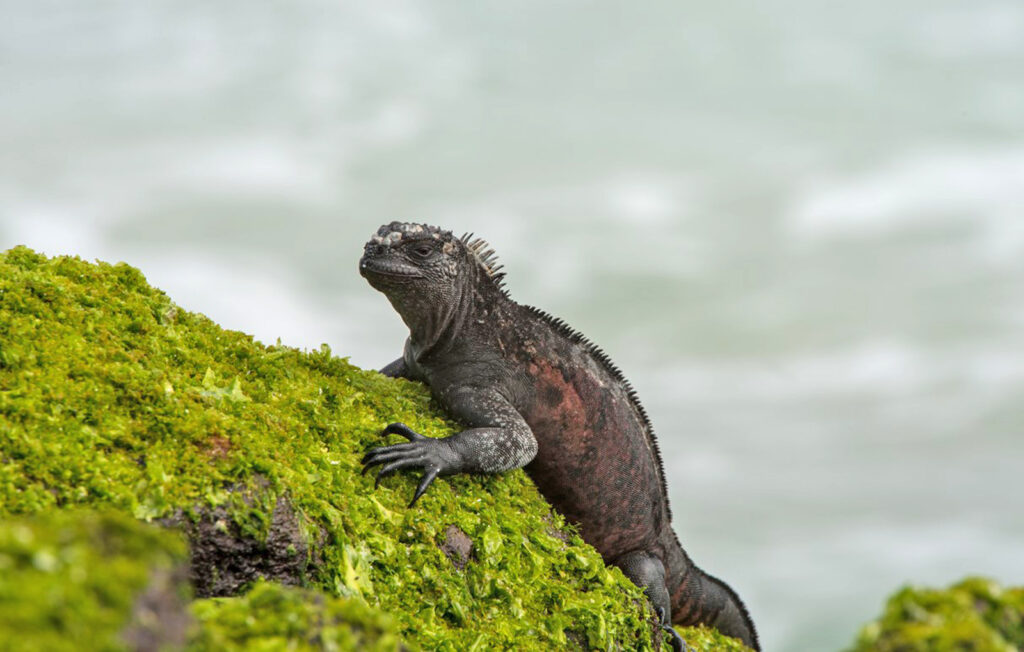
Marine iguana – Isole Galàpagos
Marine iguanas in the Galàpagos Islands, as a result of global warming, are impacted by ocean warming and are adapting to it. But for how long will these iconic reptiles be able to adapt?
Terrestrial and aquatic ecosystems are linked by complex feedback mechanisms that regulate the climate of the Earth.
It is paramount to implement actions that not only reduce CO2 emissions but also enhance ecosystem functionality and ecological complexity, species diversity, resilience to disturbances and extreme events.
According to the WWF 2022 Living Planet Report, from 1970 to 2016 the Earth has lost at least 70% of biodiversity in terms of population of wild species. On the vegetation front, 30% of trees are threatened by extinction, according to State of the World’s Trees’.
These trends highlight the intertwined and symbiotic connections between human beings and the space we call nature, we are deeply immersed in nature and ultimately the Earth.
Nature inspired mitigation solutions have the potential to contribute substantially to tackling the climate crisis and to meet the goals of the One Health Approach.
The relevance of this approach emerged during the Covid-19 pandemic crisis: the health of people depends on healthy ecosystems, plants and animals.
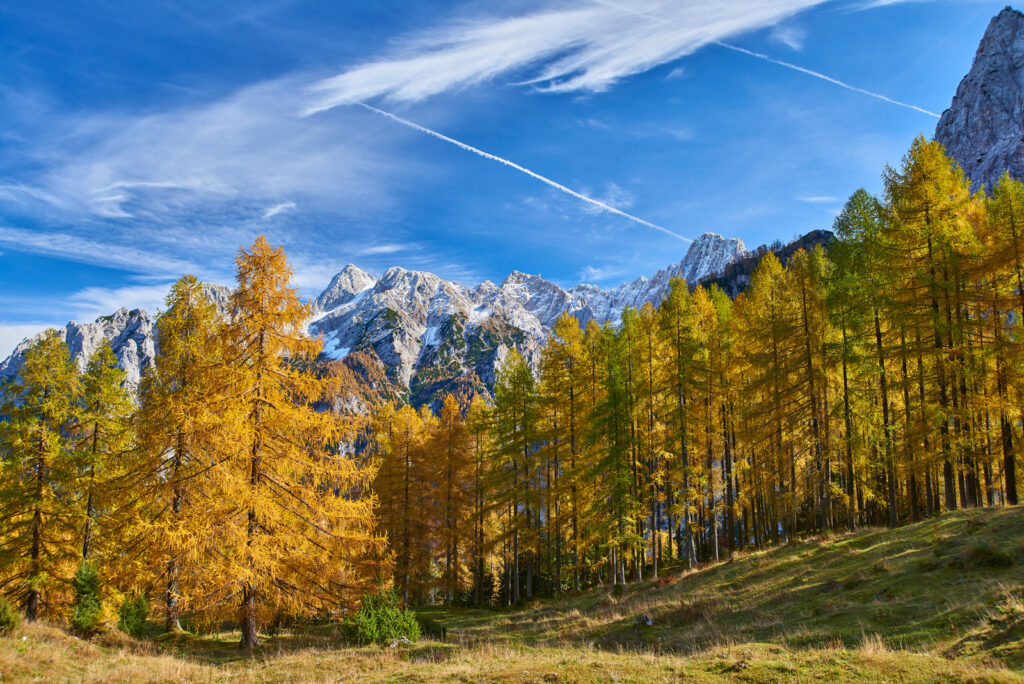
Eastern Alps – Larch forests – The Alps are mostly exposed to temperature rise. Photo Dario Di Gallo
Nature based solutions are a pool of actions to protect, manage and restore natural ecosystems. NBS full deployment has a mitigation potential of 5-11 GtCO2 e within 2030 and 10-18 GtCO2 e within 2050 (UNEP, IUCN 2021)
Gaia Stefanelli
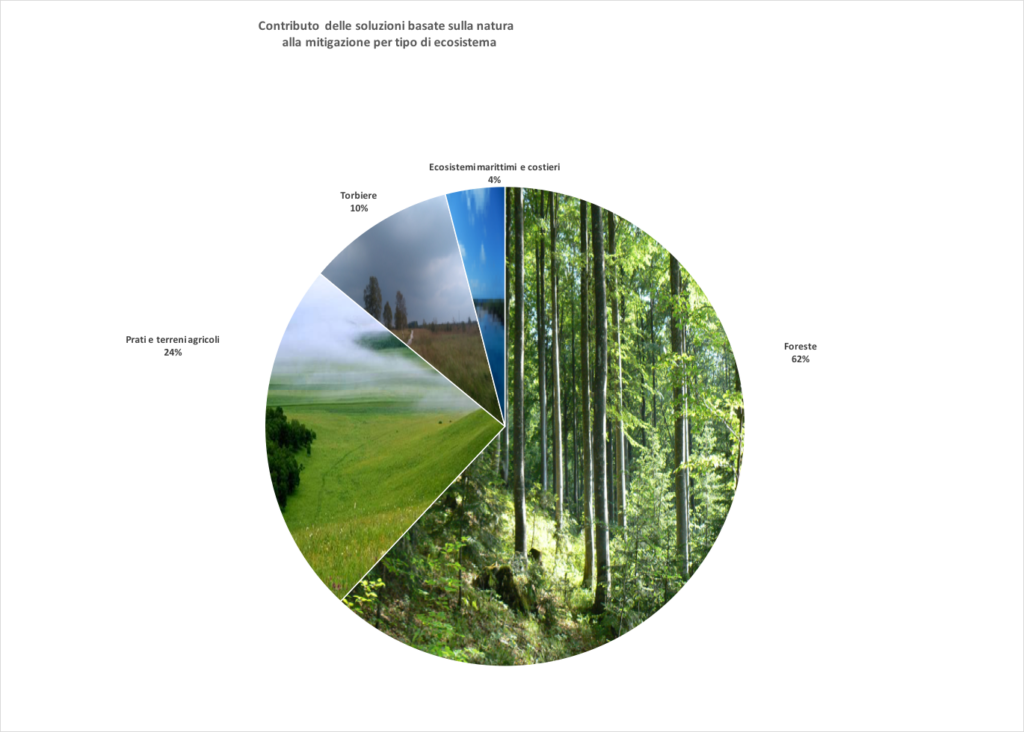
Source: dati UNEP, IUCN 2021
Nature4climate, a think tank, has quantified the potential mitigation of NBS like conservation, restoration and improved management of terrestrial ecosystems in the world. The result is the Global Atlas of Nature Based Solutions. For Italy there is a potential reduction of 18.54 million tonnes of CO2 equivalent , to be achieved through reforestation, the management of fertilizers and animal manure, agroforestry, better forest management and the cultivation of vegetables.
Gaialab was born from the idea of developing projects and raising awareness of actions to tackle the climate crisis. Gaialab gives voice to people, enterprises, organizations and citizens who decide to commit to protect our Planet.
